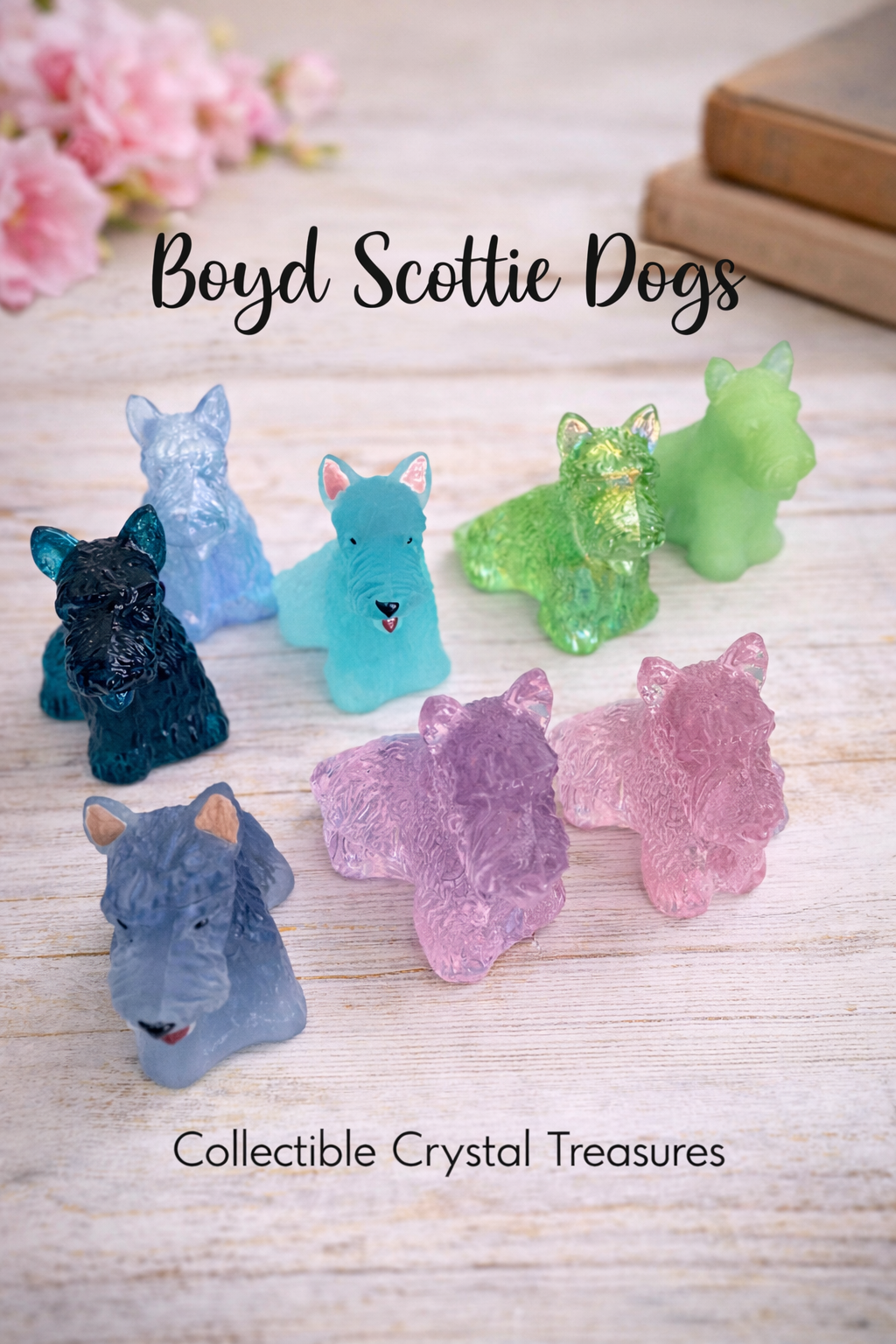
Vintage Boyd Glass: A Collector’s Guide with a Spotlight on Scottie Dog Figurines
Few names in modern collectible glass carry the same charm and devoted following as Boyd Glass. Known for its vibrant colors, whimsical designs, and limited production runs, Boyd Glass has become a favorite among collectors who appreciate both artistry and nostalgia.
The Story Behind Boyd Glass
Boyd’s Crystal Art Glass was founded in 1978 by Bernard C. Boyd and his son, continuing a family tradition that spans four generations of glassmaking.
What set Boyd apart immediately was its commitment to color. Unlike many manufacturers, Boyd Glass often produced pieces in extremely limited runs—sometimes just one or two days—ensuring that colors were rarely repeated.
This approach created instant scarcity and collectibility, especially for those who chase specific color variations.
Signature Traits Collectors Look For
Boyd Glass is instantly recognizable once you know what to look for:
The iconic “B in a diamond” mark, sometimes with additional letters or numbers for specific series
Rich glass colors like slag, carnival, and uranium
Small-scale decorative items including animals, salt cellars, and paperweights
Frequent use of older moulds combined with new color formulas
Many pieces also glow under black light, especially those made with uranium glass—something collectors actively seek out.
Why Animal Figurines Became So Popular
Boyd understood something critical: collectors don’t just want glass—they want personality.
Animal figurines became a major part of their production line, with everything from owls and cats to bears and dogs.
These pieces are small, affordable, and highly collectible—perfect for building themed collections or color runs.
The Scottie Dog Figurines: Small Pieces, Big Demand
Among Boyd’s most beloved creations are the Scottie dog figurines.
These aren’t just one design—they’re an entire family of molds and series, including names like:
Charlie
Duke
JB
Mac
Each version comes in multiple colors, often released in limited batches. Some stand just 2 to 3 inches tall, making them ideal for display or grouping.
What makes them especially collectible:
1. Color Variety
Scottie dogs were produced in dozens of colors—from classic cobalt to Vaseline (uranium) glass that glows under UV light.
2. Series Collecting
Many were issued in structured color series, sometimes limited to 36 colors per mold.
This creates a “completion chase” that serious collectors love.
3. Unique Finishes
You’ll find:
Slag glass (swirled colors)
Carnival finishes (iridescent sheen)
Satin or hand-painted examples
4. Affordability with Upside
Unlike high-end antique glass, many Boyd Scottie dogs still trade in accessible ranges—but rare colors or uranium variants can command higher prices.
A Hidden Bonus: Uranium Glass Appeal
Some Boyd Scottie dogs were produced in uranium glass, which glows bright green under black light.
This crossover appeal—between Boyd collectors and uranium glass collectors—drives demand and can push values higher, especially for unusual color combinations.
How to Identify Authentic Boyd Scottie Dogs
If you’re sourcing or listing these, don’t guess—verify:
Look for the B in a diamond mark (sometimes faint or small)
Check size (most are between 2–3 inches tall)
Identify the specific mold name if possible (Charlie vs Duke matters)
Note color and whether it fluoresces
These details directly impact value and buyer confidence.
Final Thoughts: Why Boyd Glass Still Matters
Boyd Glass sits in a unique position in the collectibles world. It’s not antique in the traditional sense—but it behaves like one in the market.
Limited runs, strong collector communities, and endless color variations make it highly engaging to buy, sell, and curate.
And if you want a smart entry point?
Start with the Scottie dogs.
They’re small, recognizable, and addictive to collect—and once you start chasing colors, you’ll understand exactly why Boyd Glass still has such a loyal following.