When “Antique” Isn’t Antique: Understanding Modern Famille Rose and Korean Decorative Porcelain
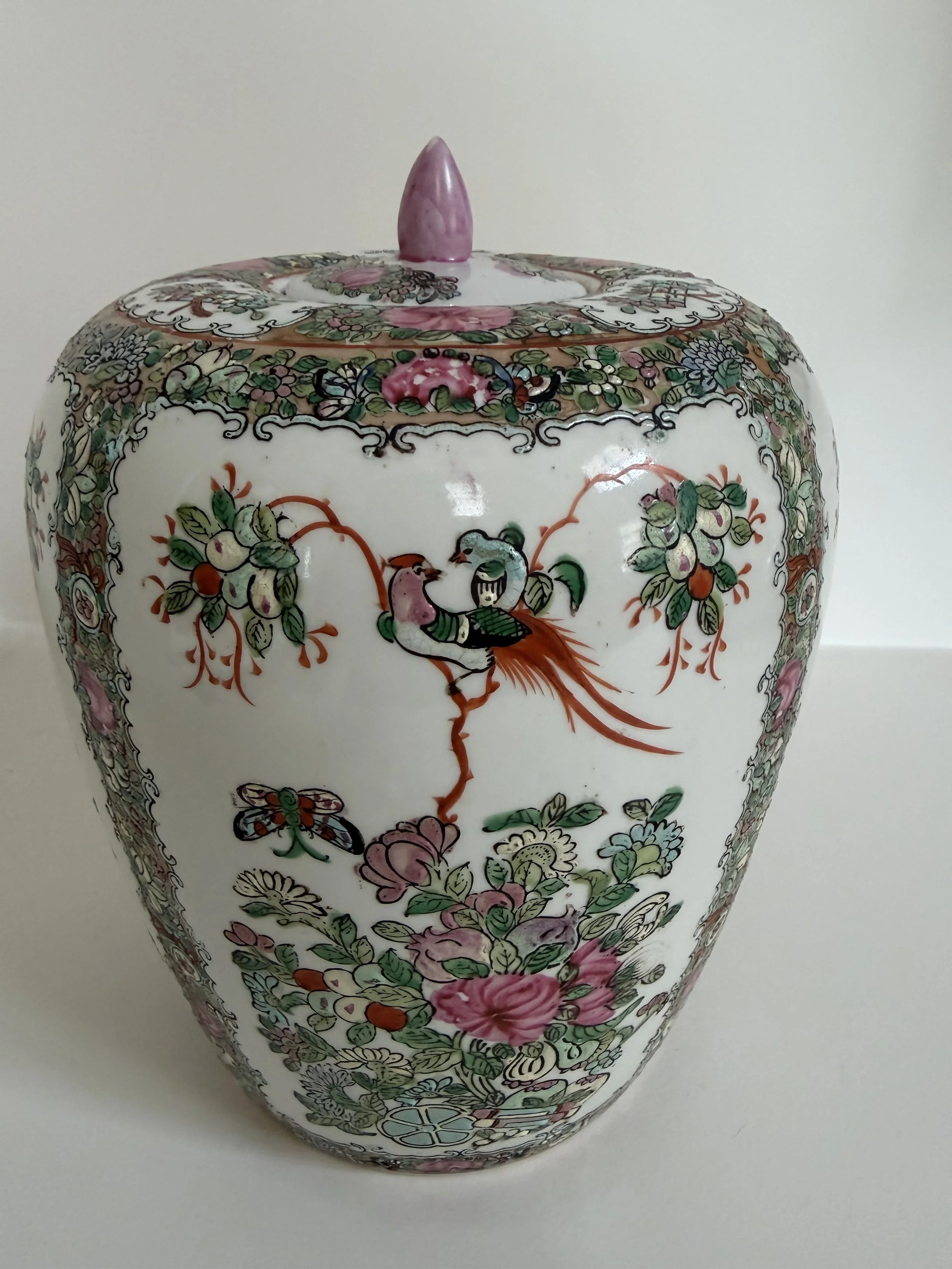
Early to mid 1900 export porcelain. This one is of good quality as you can see from the raised enameling.
If you spend enough time at estate sales, antique malls, and auctions, you start noticing patterns. One thing I’m seeing more and more lately is modern decorative porcelain being priced and presented as rare antique Chinese collector pieces.
The most common examples? Famille Rose and Rose Medallion style porcelain — especially pieces marked “Made in Korea.”
Now, this doesn’t mean these pieces are unattractive or without value. Many are colorful, decorative, and look beautiful in traditional interiors. But there is a major difference between decorative import porcelain and true antique Chinese porcelain, and understanding that difference can save buyers from overpaying.
What Is Famille Rose?
Famille Rose refers to a style of Chinese porcelain decoration that became popular during the Qing Dynasty in the 18th century. The term describes the soft pink enamel palette used in elaborate hand-painted scenes featuring flowers, birds, landscapes, and court figures.
Authentic antique examples can be extremely valuable depending on:
Age
Quality of painting
Porcelain body
Provenance
Rarity
Condition
Fine antique examples often have remarkable detail, refined enamels, and a delicacy that is difficult to reproduce.
The Rise of Decorative Reproductions
During the mid-to-late 20th century, large quantities of Asian decorative porcelain were imported into the United States for the home décor market. Many pieces were inspired by antique Chinese styles but were never intended to deceive buyers into believing they were centuries old.
These imports were commonly produced in:
Korea
Hong Kong
Taiwan
Later mainland China
You’ll often find:
Ginger jars
Large floor vases
Lamps
Garden seats
Rose Medallion style plates and urns
Some are hand-finished and visually impressive, but they are still modern decorative pieces rather than museum-quality antiques.
A Big Clue: “Made in Korea”
One of the easiest ways to identify a modern decorative piece is the country-of-origin mark.
If a porcelain item says:
“Made in Korea”
“Made in Taiwan”
“Made in Hong Kong”
…it is not an 18th or 19th century Chinese antique.
These marks immediately place the piece in the modern export era, generally mid-to-late 20th century.
That doesn’t make it worthless. It simply changes the category from antique Chinese porcelain to decorative import porcelain.
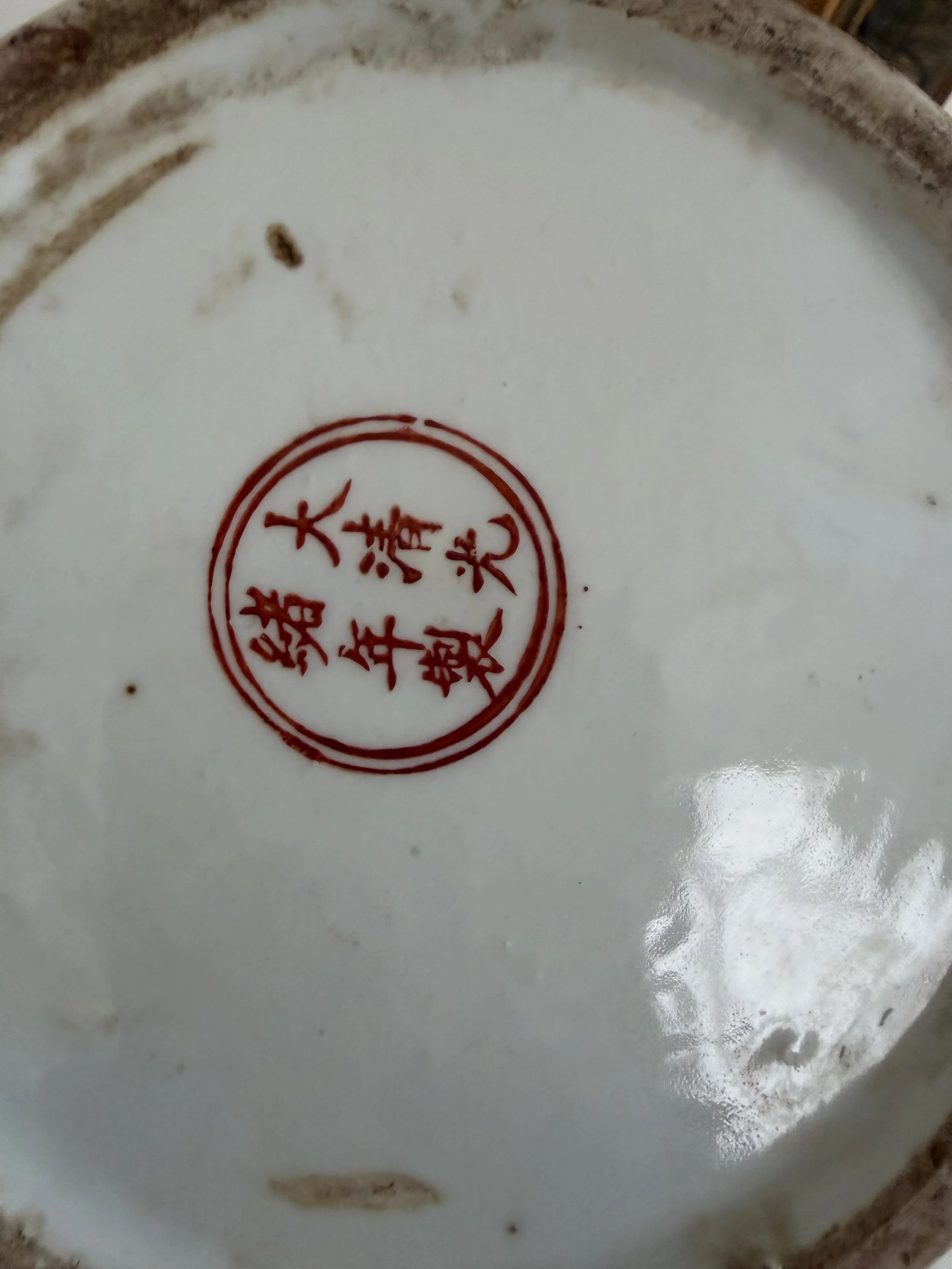
Makers mark made to imitate antique pieces.
Common Signs of Modern Reproduction Pieces
Here are a few things I look for when evaluating porcelain at estate sales:
Extremely Bright Colors
Modern enamels are often brighter and more uniform than older hand-mixed antique enamels.
Heavy Gold Decoration
Many decorative imports use thick gold accents to create an “expensive” appearance.
Thick Porcelain Bodies
Older porcelain is often surprisingly refined and delicate compared to newer reproductions.
Repeated Patterns
If multiple identical pieces appear frequently online or at estate sales, chances are they were mass imported.
Artificial Aging
Tea staining, crackling, or intentionally distressed surfaces are often added to create the illusion of age.
Modern Hardware
Drilled lamps, recent brass mounts, and modern felt bottoms are major clues.
Decorative Value vs. Collector Value
This is where confusion often happens.
A large decorative Famille Rose floor vase may still sell well because:
It works beautifully in interiors
Designers use them for color and scale
Traditional decorating remains popular
But decorative value is not the same as antique collector value.
A buyer paying hundreds or thousands believing they are purchasing rare Qing Dynasty porcelain may be disappointed to learn the piece was imported in the 1970s.
Buy What You Love — Just Know What You’re Buying
At the end of the day, there is absolutely nothing wrong with buying decorative porcelain if you love the look. Beautiful objects do not need to be 200 years old to deserve a place in your home.
The key is understanding what you are purchasing and paying accordingly.
Knowledge matters in the antiques world — and sometimes the mark on the bottom tells the real story.