Micro Mosaic Jewelry
The Art of Italian Micro Mosaic Jewelry: Tiny Glass, Timeless Beauty
Few jewelry techniques are as mesmerizing as Italian micro mosaic. At first glance, these pieces appear painted. Look closer, and you’ll discover something extraordinary — thousands of tiny hand-cut glass fragments carefully set by hand to form intricate designs.
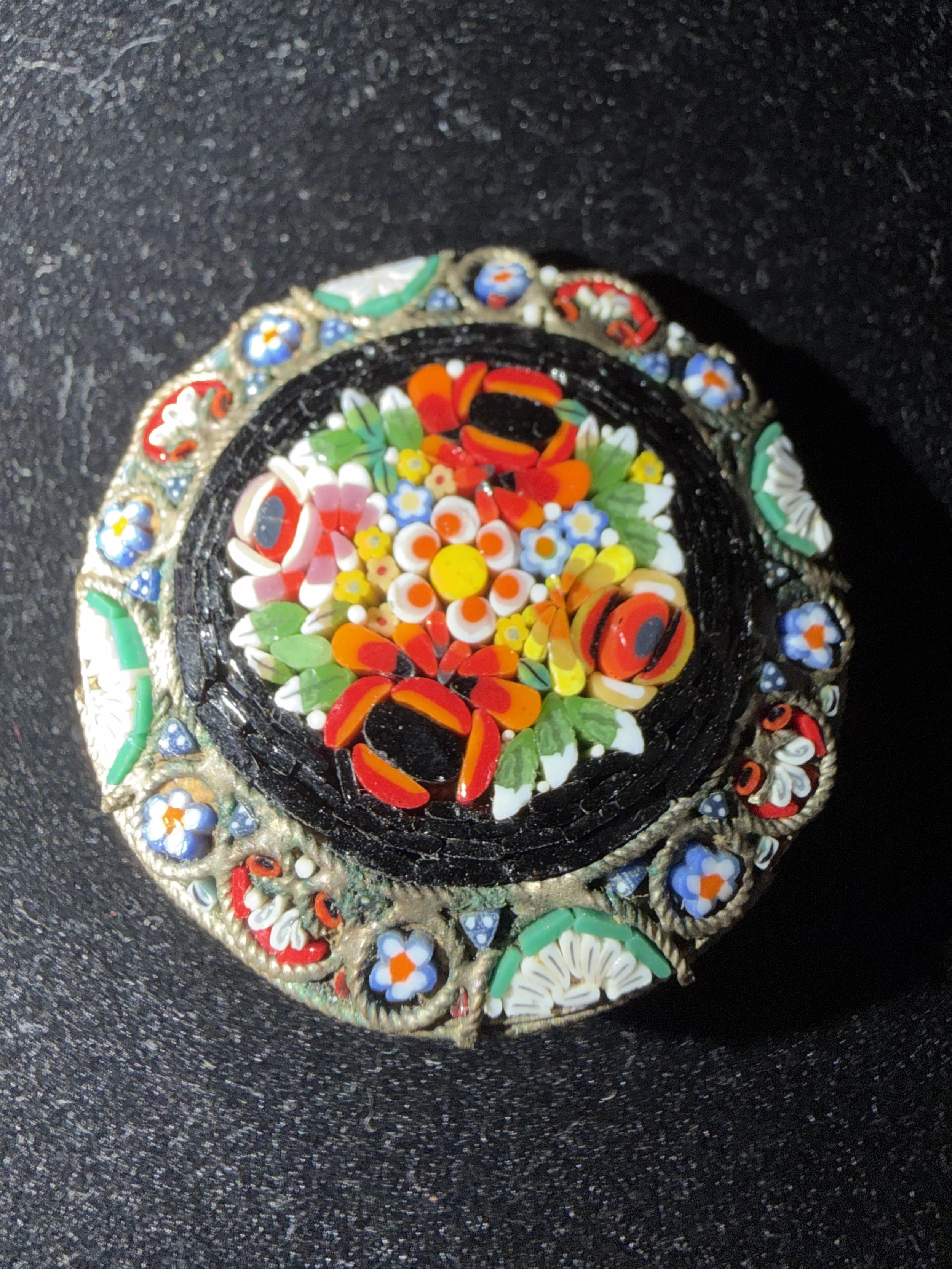
Recently, I added a beautiful floral example to the shop, stamped Made in Italy, and it’s the perfect opportunity to talk about what makes these pieces so collectible.
What Is Micro Mosaic?
Micro mosaic jewelry is created using tesserae — extremely small pieces of colored glass that are individually cut and placed to form an image. Unlike enamel or painted jewelry, nothing here is brushed on. Every color you see is a separate piece of glass.
The technique originated in Rome in the late 18th century and became especially popular during the 19th century Grand Tour period, when travelers brought home souvenirs showcasing Italian artistry.
Grand Tour vs. 20th Century Examples
Collectors often search for “Grand Tour” micro mosaics, which date to the 1800s and typically feature Roman landmarks or classical motifs. Those pieces can command significant prices.
However, many beautiful examples were also made in the early–mid 20th century, particularly those stamped Made in Italy. These later pieces often focus on florals, millefiori borders, and vibrant black backgrounds — just like the one currently in the shop.
They may not be Victorian, but they are still handcrafted works of art with remarkable detail.
Why the Black Background Matters
A black glass ground is classic in Italian micro mosaic work. It intensifies color contrast and gives the floral composition dramatic depth.
In this brooch, you’ll notice:
Layered red, orange, and yellow blossoms
Tiny white and blue accent flowers
Green leaves created from individually shaped tesserae
A decorative border incorporating millefiori-style elements
The workmanship is precise and visually dimensional.
Collecting Micro Mosaic Jewelry
When evaluating micro mosaic, condition is everything. Look for:
✔ Intact tesserae (missing pieces reduce value significantly)
✔ No cracks in the base glass
✔ Secure clasp
✔ Clean metal setting with age-appropriate patina
Size and subject matter also influence value.
Early 20th century Italian examples typically fall in a moderate collectible range, making them an accessible way to own a piece of traditional European craftsmanship.
Why These Pieces Still Matter
Micro mosaic jewelry represents patience and skill in an era before mass automation. Each tiny fragment was placed by hand. No shortcuts.
Even later 20th century examples carry forward a centuries-old Roman technique — wearable art with genuine history behind it.
It’s the kind of piece that sparks conversation when worn and rewards close inspection.
If you love finely detailed European craftsmanship, micro mosaic deserves a place in your collection.
Browse the current selection in the Jewelry section of Fine Vintage Treasures.