Flow Blue China: History, Identification and Collector tips
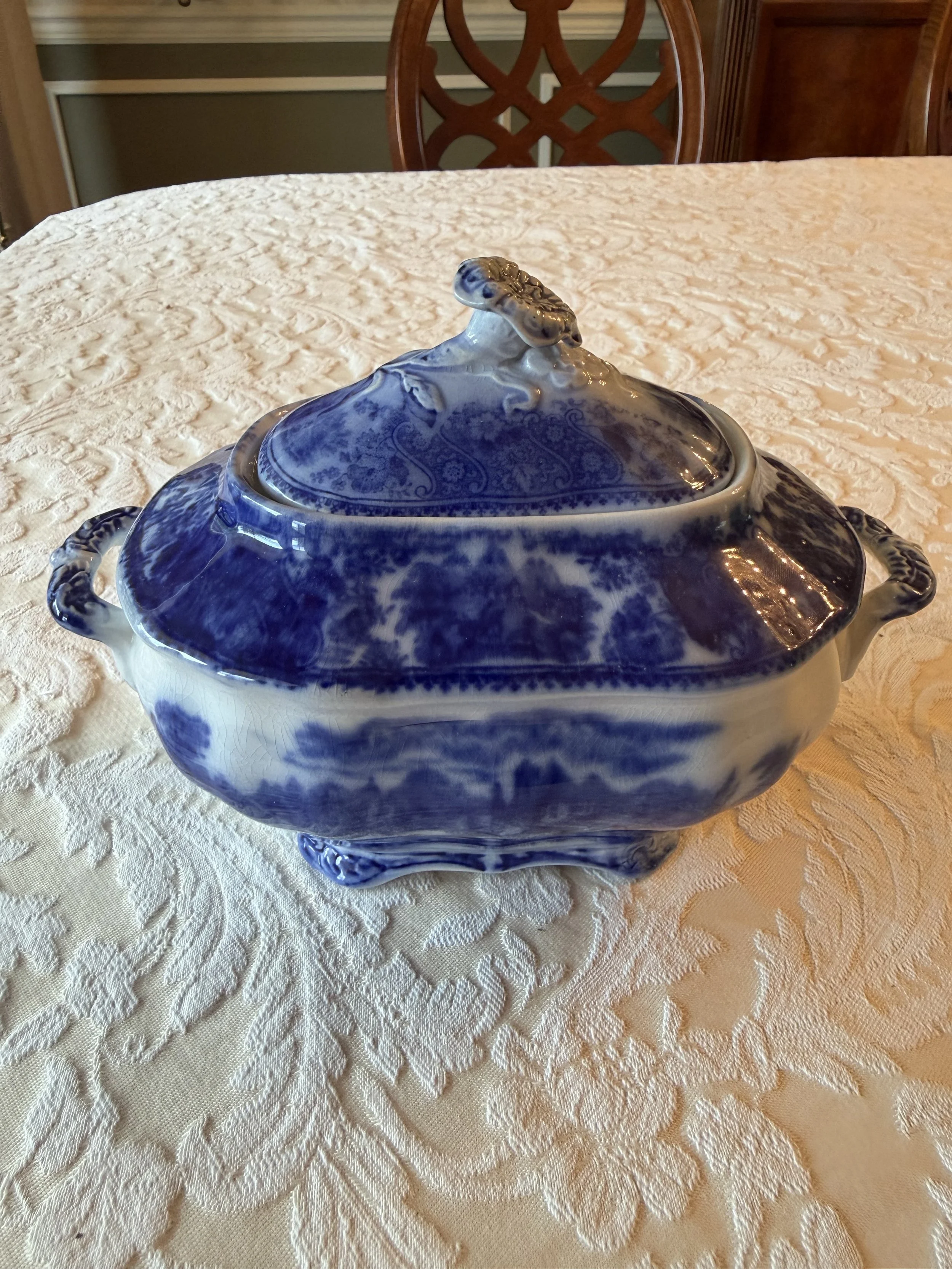
Antique Burgess & Leigh Covered Tureen
Flow Blue: The Beautiful Blur That Captivated Victorian Tables
Some antique china is admired for its precision. Flow Blue is loved for exactly the opposite reason. According to traditional story, Flow Blue began when cobalt decoration accidentally blurred during firing and was initially regarded as a defect. Whether that story is completely true remains uncertain. What is documented is that Staffordshire potters quickly learned to create the flowing blue effect deliberately, developing special glazes and firing compounds to control the distinctive cobalt haze.
Its cobalt decoration does not remain confined to crisp lines. Instead, the blue softens and spreads into the surrounding glaze, creating the dreamy, almost atmospheric appearance that gives Flow Blue its name. On one piece, the design may show only a delicate haze. On another, the cobalt may flow so heavily that parts of the original pattern nearly disappear.
That unpredictability is part of its beauty—and one reason no two pieces look quite the same.
How Was Flow Blue Made?
Flow Blue developed among the Staffordshire potteries of England during the early Victorian period, becoming especially prominent in the late 1830s and 1840s. Most examples began as transferware.
The pattern was first engraved onto a copper plate. Cobalt pigment was applied to the engraving and transferred to thin paper, which was then pressed onto the ceramic body. During firing, potters deliberately encouraged the cobalt design to seep or “flow” into the glaze. Historical sources describe more than one method, including the use of a flowing glaze or chemicals placed inside the protective firing container known as a saggar.
The result was softer and more romantic than conventional blue-and-white transferware. Flow Blue was particularly popular in the United States, where Victorian households embraced its rich color and elaborate decoration.
Although the familiar story says Flow Blue was invented accidentally, that origin has never been firmly established.
The Designs Behind the Blue
Early Flow Blue patterns frequently reflected the Western fascination with Asian art. Imagined pagodas, temples, waterways, flowers and distant landscapes appeared on everything from plates and platters to enormous pitchers and complete tea services.
Later Victorian patterns expanded to include romantic European scenery, dense florals, scrollwork and increasingly elaborate gilding. The intensity of the blue also varied—from smoky gray-blue to deep, almost inky cobalt.
Flow Blue was not produced by a single company. Numerous British potteries made it, and surviving pieces can be marked, faintly impressed or completely unmarked. A pattern name can sometimes be more useful than a prominent factory name.
A Closer Look at Scinde
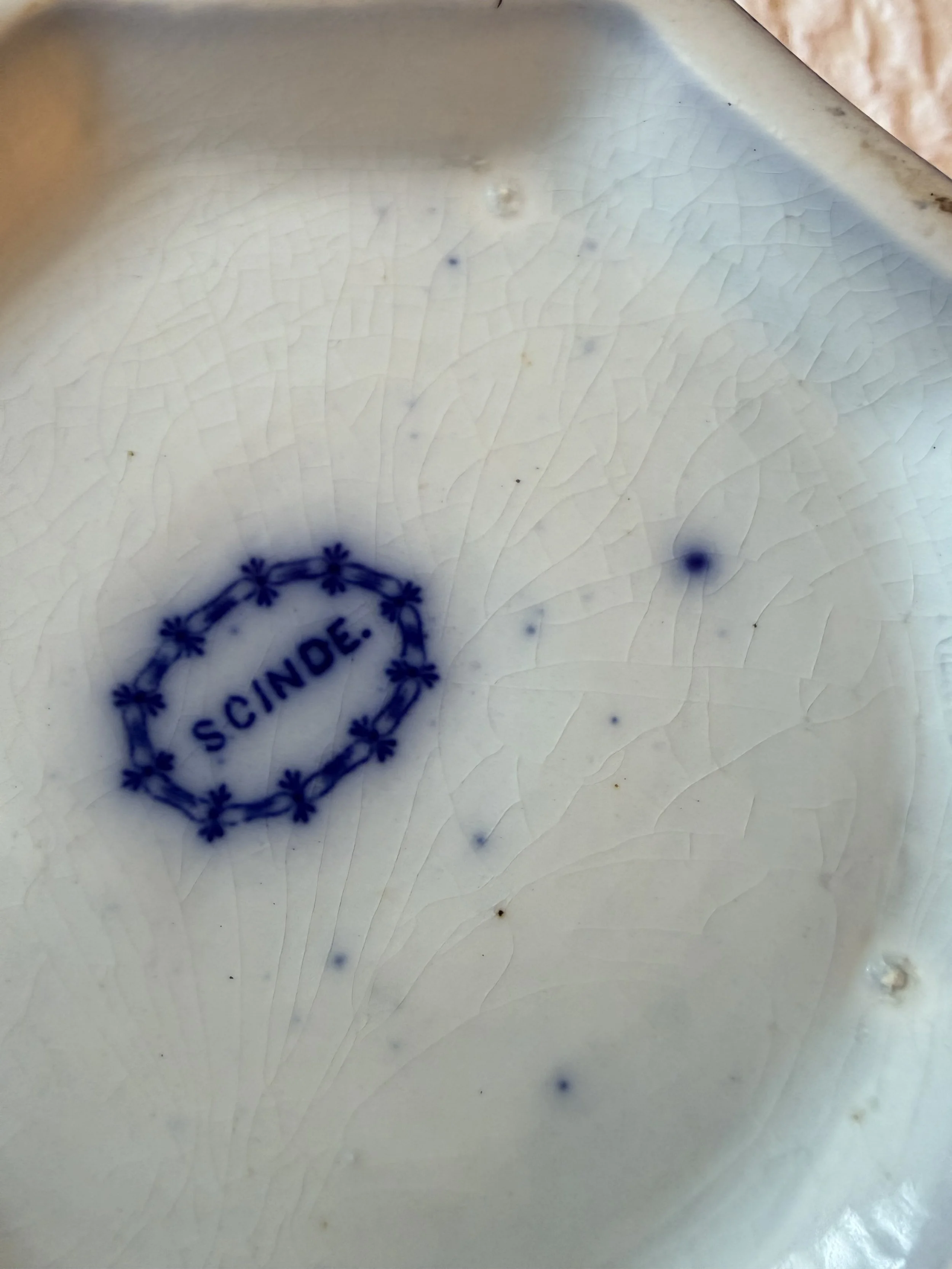
Two of the most striking Flow Blue pieces I have recently sourced are in the Scinde pattern, attributed to John and George Alcock of Staffordshire and dating to approximately the 1840s.
The first is an impressive 13-inch water ewer. Its tall form provides a generous surface for the cobalt decoration, allowing the romanticized landscape to wrap around the body. Large surviving forms like this have a strong sculptural presence; they are no longer simply tableware but decorative objects capable of anchoring an entire display.
The second is a substantial octagonal teapot, measuring approximately 9 inches high and 10½ inches from spout to handle. Its paneled body, strong architectural shape and pointed finial contrast beautifully with the softness of the flowing blue. The underside carries the printed SCINDE pattern cartouche.
Together, these pieces show why form matters so much in Flow Blue collecting. The same pattern can feel entirely different on a flat plate, a swelling pitcher or a sharply paneled teapot.
They also carry visible evidence of age. The teapot has extensive crazing, areas of discoloration and small firing imperfections consistent with a utilitarian object made roughly 180 years ago. Those details should always be disclosed, but they are not automatically defects to erase. They are part of the piece’s history.
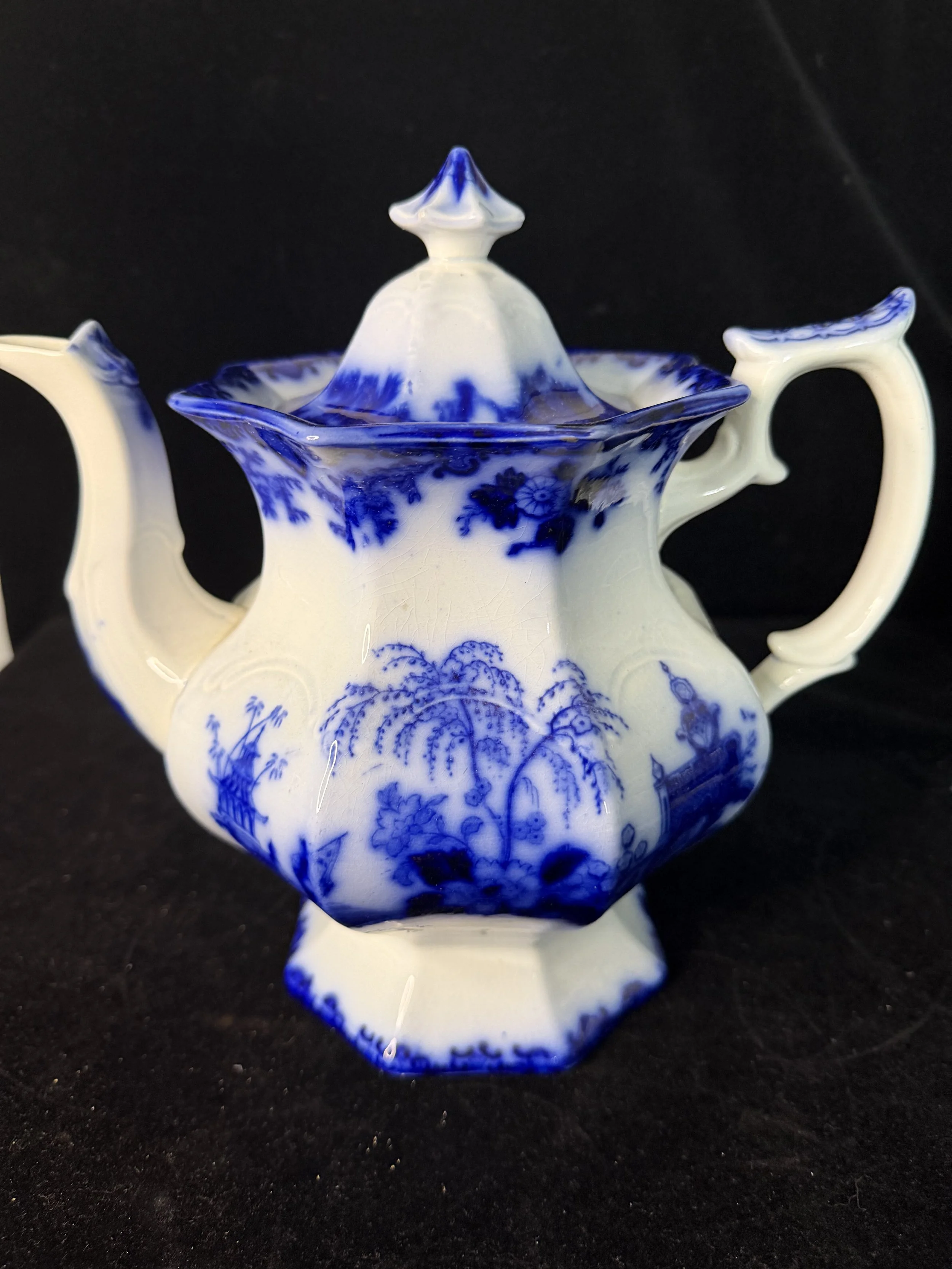
Antique Scinde J & G Alcock teapot circa 1840
How to Identify Antique Flow Blue
The Clues on a Messina Platter
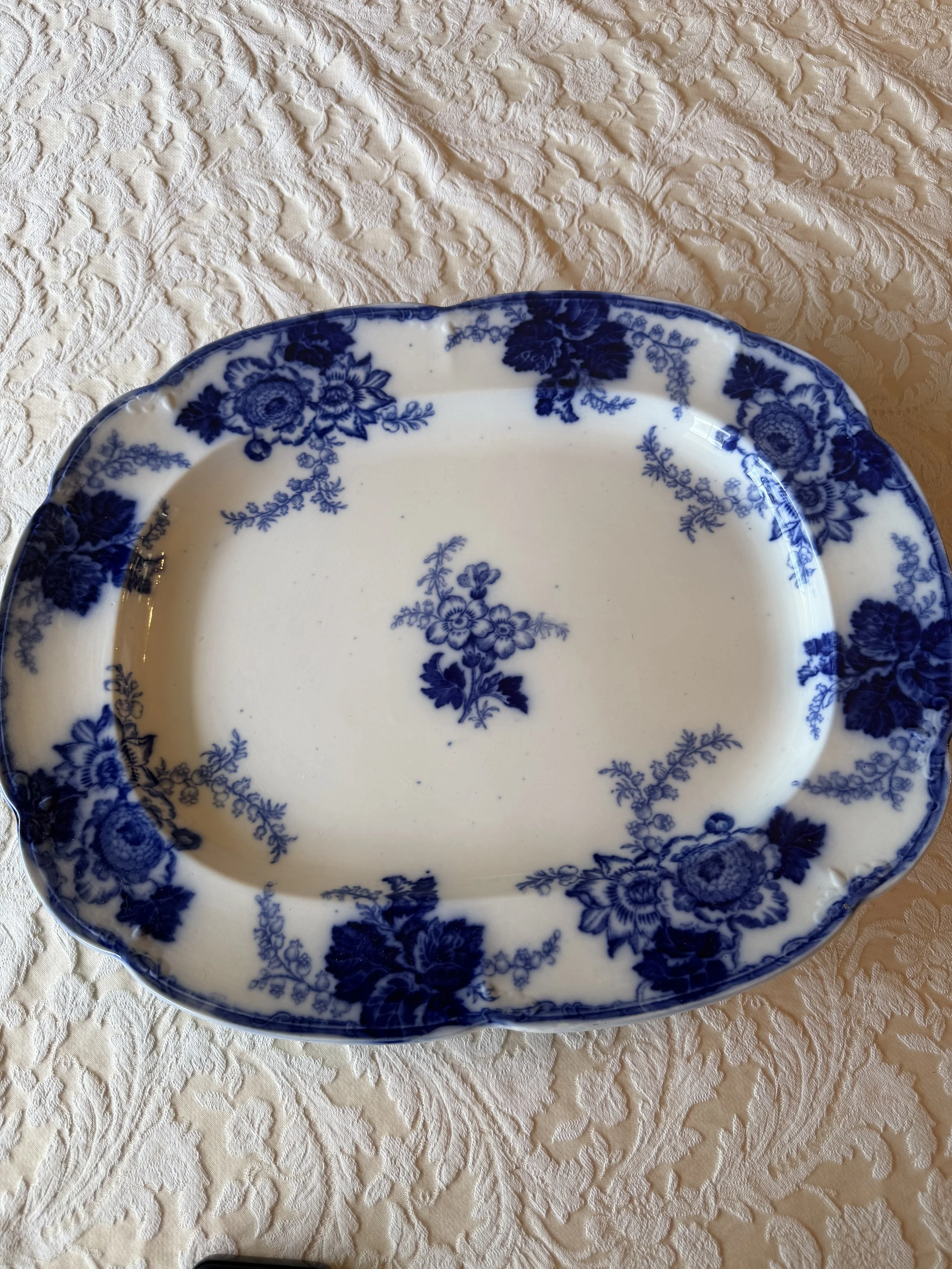
Large Antique Messina Platter
Another piece in my collection is an oval English platter in the Messina pattern. Its deep cobalt floral sprays flow softly into the creamy white ground, while the scalloped rim gives the platter a particularly graceful outline.
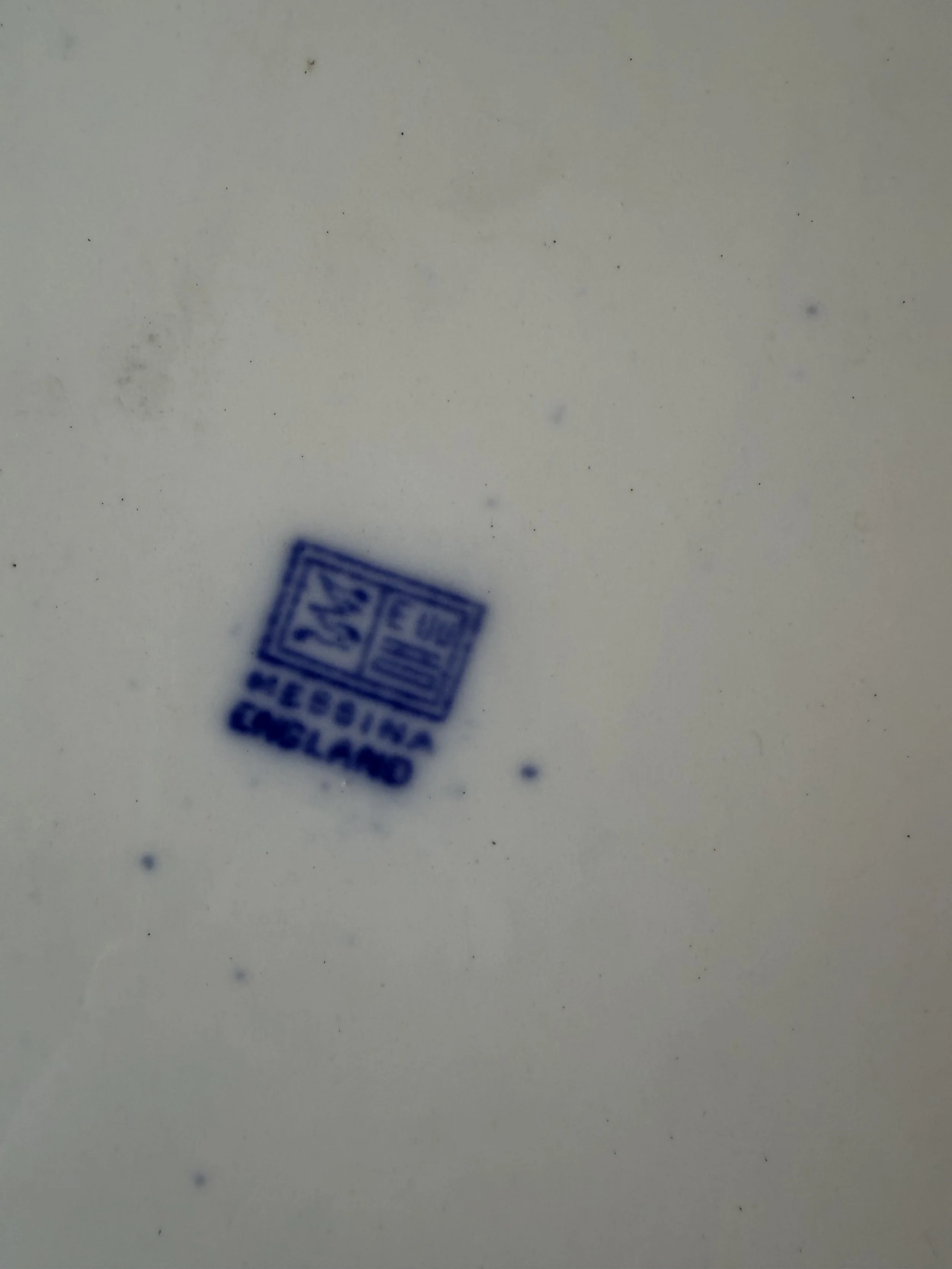
The blue backstamp reads MESSINA / ENGLAND beneath a small emblem. The pattern name and country of origin remain legible, although the upper portion of the mark has flowed and blurred—an excellent reminder that even a backstamp can be affected by the same firing process that softened the decoration on the front.
Messina is a documented Cauldon pattern associated with Brown-Westhead, Moore & Co. The England wording indicates production after 1891, and Messina examples are documented around 1900. The platter therefore belongs squarely to the late-Victorian phase of Flow Blue, when floral designs, open white space and shaped rims had begun to replace the densely covered Asian-inspired patterns seen on many earlier pieces.
This platter also demonstrates the difference between pattern and maker. Messina is the design name; Cauldon identifies the pottery tradition under which it was produced. When researching antique ceramics, every readable part of the backstamp matters—and one blurred letter can lead an identification in the wrong direction.
When examining a possible Flow Blue piece, I look at:
The printed or impressed mark on the underside
The ceramic body, weight and glaze
Whether the cobalt flow appears integrated into the glaze
The shape and whether it corresponds to known period forms
Signs of genuine use and age rather than artificially applied wear
The pattern name and documented manufacturer history
Repairs, hairlines, chips and restoration
Country-of-origin wording can also help. Many later English exports are marked “England” or “Made in England,” while early Victorian pieces may carry only a pattern cartouche, an impressed factory mark or no easily visible mark at all. A missing maker’s mark does not automatically make a piece a reproduction, but it does mean the attribution must be made carefully.What Condition Should Collectors Expect?
Flow Blue was made to be used. Crazing, utensil wear, staining and small manufacturing irregularities are common, especially on early earthenware and ironstone.
Condition still affects value. A hairline at the base of a handle or spout, a repaired finial, a chipped rim or concealed restoration can make a considerable difference. Teapots, pitchers and covered serving pieces deserve particularly close inspection because handles, spouts, lids and finials are natural weak points.
Collectors differ in what they will accept. Some want pristine display pieces. Others prefer honest signs of age, especially on a rare pattern or unusual form. The important point is accurate description—not pretending that every antique survived two centuries untouched.
Why Flow Blue Still Works in Today’s Home
Flow Blue has enough history for a serious collection, but it does not need to live behind glass.
A single platter can become the center of a plate wall. A large pitcher can hold flowers or stand alone on a mantel. A teapot can bring depth to a cabinet filled with blue-and-white porcelain. Because the cobalt edges are softened, Flow Blue mixes especially well with crisp white ironstone, silver, warm woods, brass and traditional textiles.
That versatility is why it continues to appeal. It can feel formal, collected, romantic or comfortably imperfect depending on how it is displayed.
For me, the best pieces are those that combine history, strong form and visual impact. The Scinde ewer and teapot do exactly that. They are beautiful from across a room, but their marks, crazing and flowing cobalt reward a closer look.
Antique ceramics do more than decorate a home. They preserve the evidence of how something was made, used and valued long before it reached us. In Flow Blue, even the blur tells part of the story.