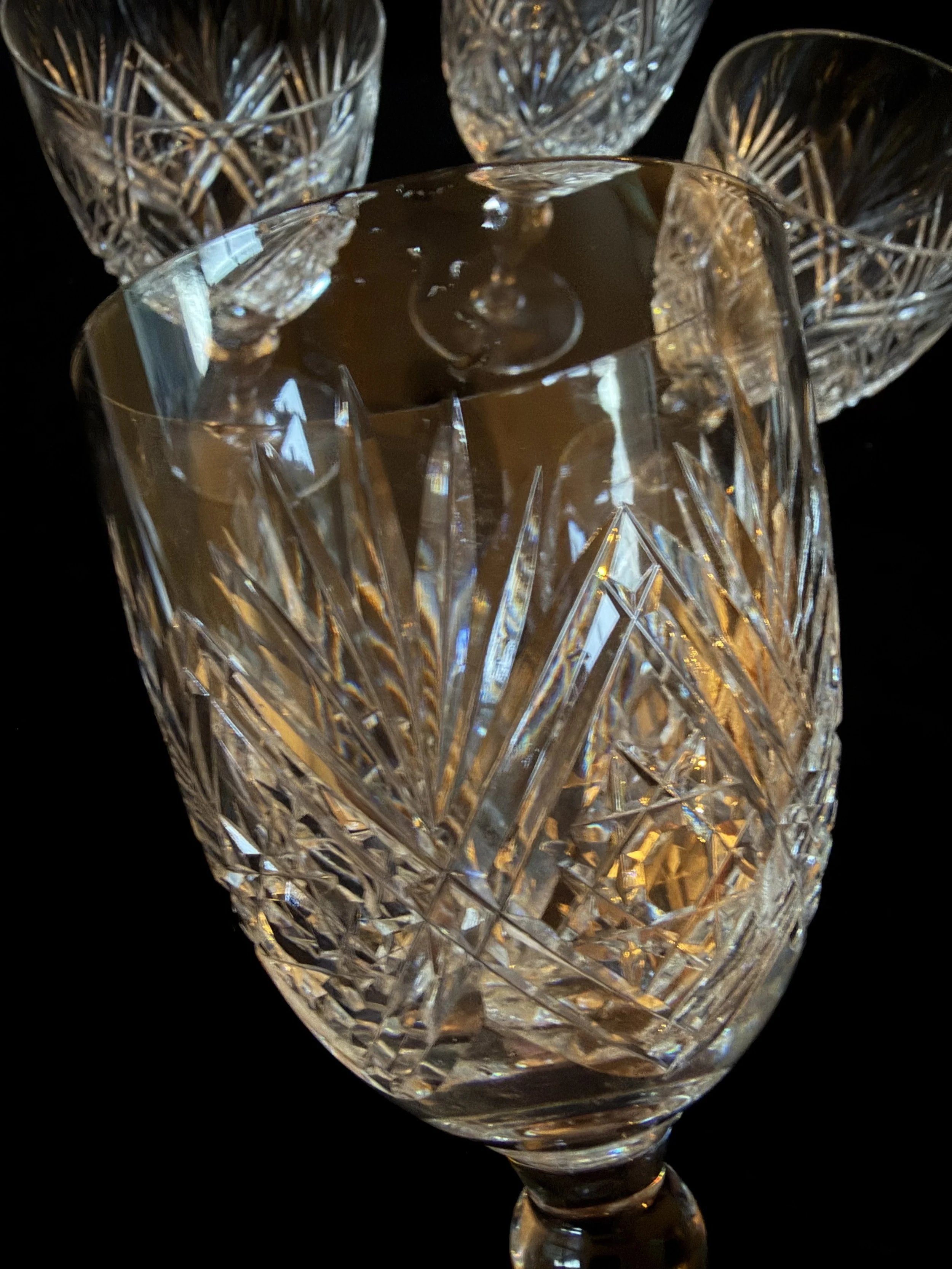
Thomas Webb Glass: A Collector’s Guide to One of England’s Finest Crystal Makers
If you’re drawn to shimmering crystal that catches the light like cut diamonds, chances are you’ve already admired the work of Thomas Webb & Sons—one of England’s most celebrated 19th–20th century glassmakers. Known simply today as Thomas Webb, the company produced everything from delicately engraved goblets to lavish cameo glass that still commands serious attention from collectors.
This guide breaks down what makes Webb special, how to date pieces, and which patterns and forms collectors hunt for today.
Who Was Thomas Webb?
Founded in 1837 by Thomas Webb, the company grew out of England’s world-famous Stourbridge glass region. By the mid-1800s, Webb had carved out a reputation for:
precision-cut crystal
flawless clarity
refined engraving
and artistic glass techniques no other makers could successfully duplicate
By the 1870s–1890s, Webb was winning international awards and supplying Victorian high society.
What Thomas Webb Is Known For
Collectors typically see Webb fall into three major categories:
1. Cut Crystal
Sharp, diamond-brilliant cuts were a Webb signature:
hobstar and fan motifs
vertical fluting
deep crisscross cutting
high clarity lead crystal
Weight in hand is a giveaway—Webb glass feels substantial.
2. Engraved Glass
Webb employed elite master engravers who produced:
stags and wildlife scenes
vines and botanical scrolls
heraldic crests
armorial glass for aristocratic estates
Hand-engraved decoration often makes pieces one-of-a-kind.
3. Cameo Glass (The Holy Grail)
This is where Webb hit legendary status.
Using multiple glass layers, artists carved away the outer surface to reveal contrasting colors beneath. Think:
opaque white figures over emerald, lavender, or ruby
mythological scenes
classical motifs
Authentic cameo Webb can bring four to five figures at auction.
Backstamps and How to Identify Webb
Unlike pottery, glass marks weren’t always applied consistently. You may see:
“THOMAS WEBB & SONS”
“WEBB”
Acid-etched marks on footrim or bowl
Paper labels on later 20th-century glass
Older pieces are often unmarked, so pattern and craftsmanship are key.
Quick ID clues:
crisp cutting, no soft edges
heavy weight
balanced stems and proportions
clarity—no fog or grey tint
If it feels ordinary, it’s probably not Webb.
Commonly Collected Webb Patterns
Many Webb goblets and barware fall into pattern families rather than named patterns (unlike Waterford or Lenox). Known and documented motifs include:
St. Andrew (fine diamond + vertical line cutting)
Queen’s Pattern
Hampton
Royal pattern inspired cuts
Geometric Regency-style fans and stars
Because Webb produced for Harrods, Liberty, and even Tiffany, some Webb glass appears under private retailer names.
Dating Webb Glass
Approximate rule of thumb:
1850–1870 – Early handblown forms, minimal decoration
1870–1900 – Peak artistry; cameo, heavy engraving, exhibition glass
1900–1930 – Cut crystal for luxury homes, Edwardian through Art Deco
1950s–1980s – Simplified patterns, tableware production broadened
1990 – Webb ceases operations; brand absorbed
Older = more artistic
Mid-20th = more functional, still desirable
Current Market Value
Thomas Webb has surged back in popularity thanks to:
renewed interest in bar carts & entertaining
collectors rejecting mass-produced crystal
cameo glass appearing in museums (V&A, Corning Museum of Glass)
Typical auction/retail prices today:
goblets: $25–$75 each
wines/cocktails: $20–$50
tumblers: $20–$40
engraved or rarer patterns: $75+ per stem
cameo glass: Can be very valuable depending on complexity
Condition matters—chips kill value.
Why Collect Webb?
Three reasons collectors love it:
Quality you can see and feel
Provenance—true British heritage
Functional beauty—you can serve in it, display it, and pass it down
Webb is investment-grade crystal without the Waterford price inflation.
Buying Tips
Always check rims and bases for flea bites
Pick up and feel the weight—Webb is solid
Compare cutting clarity under light
When in doubt, buy engraved over plain
Avoid heavily clouded dishwasher-damaged pieces
Final Word
Thomas Webb sits comfortably among the greats—Waterford, St. Louis, Baccarat—but with a handcrafted elegance that is unmistakably British. Whether you’re collecting to display, to sell, or to elevate your next dinner table, Webb glass rewards those who appreciate detail and history in everyday objects.
If you stumble across it at an estate sale or thrift store—grab first, research second.